Building an AI agent demo can take a few days. Turning that demo into a secure, reliable product that customers and employees can trust is a much larger engineering challenge.
A production AI agent must handle unclear requests, unavailable tools, changing data, model errors, security attacks, cost limits, and real business consequences. It must also provide enough visibility for teams to understand what happened when a task fails.
This guide explains the architecture, security controls, evaluation process, and monitoring required to move an AI agent from prototype to production.
Key takeaways
- Production agents need a complete system around the model, not just a prompt and API call.
- Separate orchestration, context, tools, policy enforcement, and observability into clear layers.
- Give every agent its own identity and the minimum permissions required for its task.
- Evaluate complete workflows, including tool calls and business outcomes, before every release.
- Monitor quality, reliability, latency, cost, and security continuously in production.
What makes an AI agent production-ready?
An AI agent is production-ready when it can complete a defined business task consistently, safely, and economically under real operating conditions. This means more than producing an impressive response during a controlled demonstration.
A production-ready agent should:
- Understand its scope and refuse tasks outside that scope.
- Retrieve current, authorized business information.
- Use tools through validated, auditable interfaces.
- Recover safely from timeouts, invalid results, and partial failures.
- Protect confidential information and resist prompt injection.
- Ask for human approval before high-impact actions.
- Generate traces, metrics, and logs for every important step.
- Meet measurable quality, latency, and cost targets.
Google Cloud's current guidance makes the same distinction: building an agent that works in a demo is different from operating one at scale, where teams must manage long-running state, security, governance, and the complete agent lifecycle.
A reference architecture for production AI agents
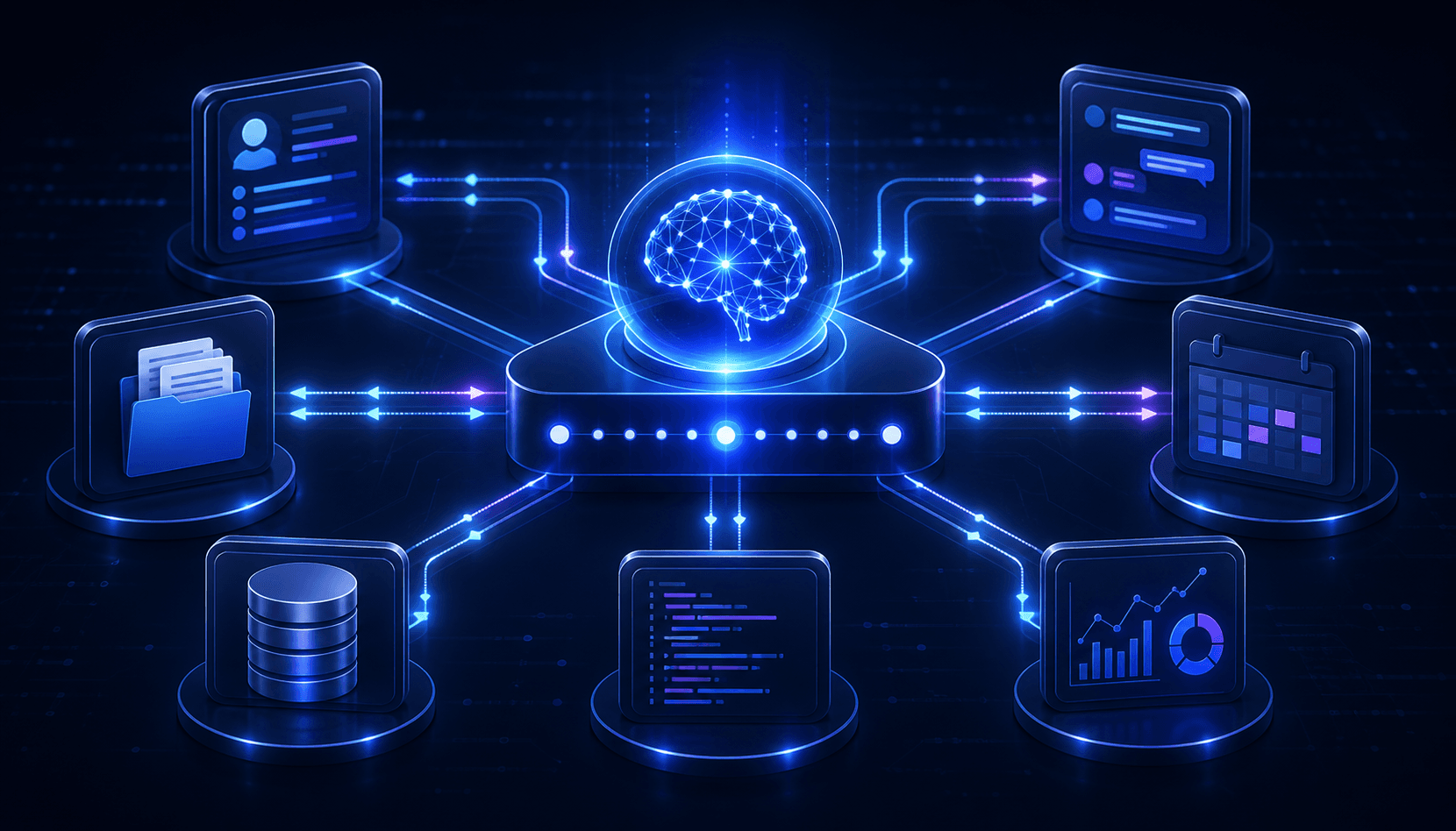
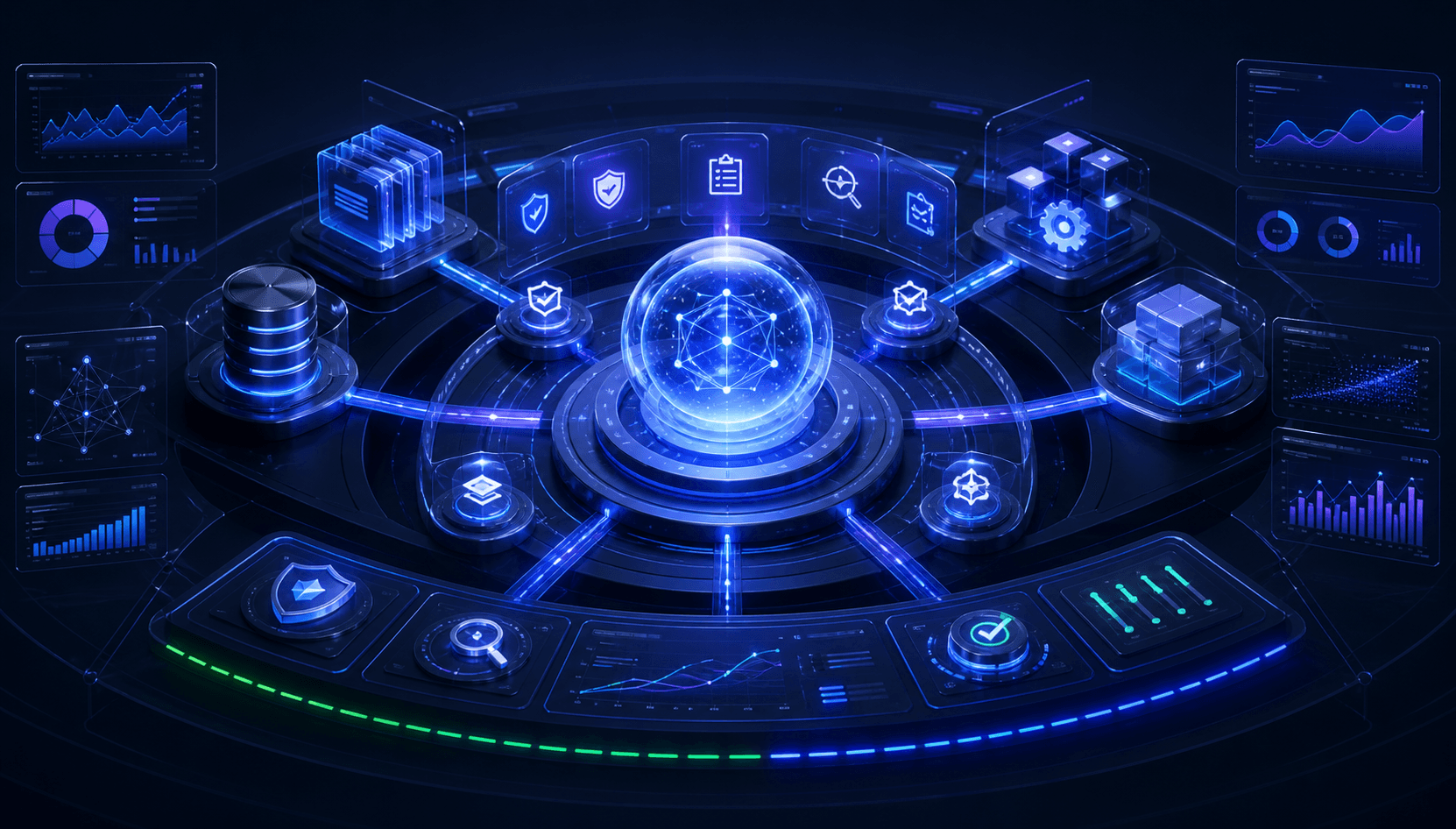
A robust agent platform is easier to secure and improve when responsibilities are separated into layers. The exact technologies can vary, but most production systems need the following components.
1. Application and identity layer
This layer provides the user interface or API through which people and systems interact with the agent. It authenticates the user, identifies the organization or tenant, applies rate limits, and records the request.
User identity must travel with the task. The agent should never receive broader access simply because the backend service has powerful credentials.
2. Orchestration layer
The orchestrator manages the agent's workflow. It interprets the goal, selects tools, tracks state, controls retries, handles errors, and determines when the task is complete.
Keep deterministic business logic outside the model whenever possible. Validation rules, permission checks, financial calculations, and workflow transitions should be implemented in normal code. The model should handle tasks that genuinely require language understanding or flexible reasoning.
3. Model gateway
A model gateway provides one controlled interface to one or more language models. It can manage model selection, fallbacks, timeouts, quotas, caching, and usage reporting.
Not every step needs the most capable model. A smaller model may classify a request, while a stronger model handles complex planning. Routing tasks appropriately can reduce latency and cost without lowering quality.
4. Context and memory layer
The context layer supplies the information the agent needs to make a decision. It may include RAG search, database queries, user preferences, conversation state, and short- or long-term memory.
Context should be relevant, current, authorized, and limited. Sending an entire knowledge base to a model increases cost and can expose unnecessary information. Retrieval should respect tenant, user, document, and field-level permissions.
5. Tool and integration layer
Tools allow agents to retrieve live data and take actions in systems such as CRMs, ticketing platforms, payment services, calendars, and internal APIs. The Model Context Protocol can provide a standard interface for discovering and using these capabilities.
Every tool should have a narrow purpose, a clear description, strict input validation, predictable error responses, and an explicit permission model. Avoid exposing a generic database or shell tool when a small business-specific operation will work.
6. Policy and guardrail layer
Guardrails enforce what an agent is allowed to read, generate, and do. They can check user permissions, sensitive data, unsafe content, transaction limits, required approvals, and whether the requested operation is inside the agent's purpose.
Critical controls must run outside the language model. A prompt that says \u201Cdo not transfer more than $1,000\u201D is not a reliable financial control. The transaction service must enforce the limit.
7. Observability and evaluation layer
This layer captures traces, metrics, logs, feedback, and evaluation results. It should show the full path from the user's request through model calls, retrieval, tool execution, approvals, and the final outcome.
OpenTelemetry's generative AI conventions provide a developing standard for recording model operations, token usage, tool calls, and latency across AI systems.
Security controls for production AI agents
Traditional application security remains necessary, but agents introduce additional risks because they interpret untrusted language and can choose actions dynamically.
Give every agent a clear identity
An organization should know which agents exist, who owns each one, what it can access, and which version is running. A dedicated agent identity makes permissions and activity easier to manage than sharing a broad service account.
Apply least-privilege access
Give an agent only the permissions needed for its specific workflow. A support agent may read customer records and create an escalation, but it should not export the entire database or change billing information.
Permissions should also be evaluated per user. The agent should not reveal information that the requesting user could not access directly.
Require approval for high-impact actions
Human approval should be required before actions that are difficult to reverse or affect external parties. Examples include sending messages, issuing refunds, deleting records, changing permissions, publishing content, and executing production deployments.
The approval interface should show the exact proposed action and relevant data, not only a vague confirmation request.
Defend against prompt injection
Documents, websites, emails, and tool results can contain instructions designed to manipulate an agent. Treat retrieved content as untrusted data. Separate it from system instructions, limit which tools are available, validate intended actions, and require approval for sensitive operations.
Protect secrets and sensitive data
Credentials should remain in a secure server-side secret manager. Never place API keys in prompts or model-visible context. Redact personal or confidential information from logs, and define retention policies for prompts, outputs, and tool results.
Design safe failure behavior
An agent should stop or escalate when it lacks sufficient information, permissions, or confidence. Retries need limits, and write operations should use idempotency controls to prevent duplicate transactions.
NIST's AI Risk Management Framework provides a useful structure for identifying, measuring, managing, and governing AI risks throughout the lifecycle.
How to evaluate an AI agent before launch
Traditional unit tests are necessary but cannot fully measure an agent's behavior. An agent can produce different valid answers, choose different tools, or take a different path for similar requests. Evaluation must therefore cover both individual components and end-to-end outcomes.
Create a representative evaluation dataset
Collect realistic tasks, normal variations, incomplete requests, edge cases, and known failure scenarios. Include examples from the people who will actually use the agent.
Test the complete trajectory
Do not evaluate only the final text. Check whether the agent selected the right tools, passed correct arguments, respected permissions, used reliable sources, avoided unnecessary steps, and reached the intended business outcome.
Run security and adversarial tests
Test prompt injection, unauthorized data requests, malicious documents, unexpected tool output, attempts to bypass approval, and requests outside the agent's scope.
Define release thresholds
Set minimum scores for task success, factual accuracy, policy compliance, tool correctness, latency, and cost. Run the evaluation suite whenever prompts, models, tools, retrieval logic, or workflow code changes.
What to monitor in production
Production monitoring should answer five questions: Is the agent useful? Is it correct? Is it reliable? Is it secure? Is it cost-effective?
Quality metrics
- Task completion and successful resolution rate.
- Human correction, rejection, and escalation rate.
- Groundedness and citation accuracy.
- Tool selection and argument accuracy.
- User satisfaction and repeat usage.
Reliability metrics
- End-to-end success and error rate.
- Model, retrieval, and tool latency.
- Timeout, retry, and fallback frequency.
- External service availability.
- Partial or duplicate action rate.
Cost and performance metrics
- Input and output tokens per task.
- Model and infrastructure cost per successful outcome.
- Number of model calls and tool calls per task.
- Cache and retrieval efficiency.
- Latency by workflow, model, and tool.
Security metrics
- Denied or out-of-scope tool requests.
- Approval requests and rejection rates.
- Unusual access patterns or activity spikes.
- Prompt injection and data leakage detections.
- Agents, tools, and credentials without an active owner.
Microsoft's guidance describes AI observability as a continuous security and governance practice rather than a one-time setup. It recommends tracking observability coverage, evaluation coverage, and telemetry for abuse scenarios across deployed AI systems.
Controlling AI agent cost
Agent costs can grow quickly because one user request may trigger multiple model calls, retrieval operations, and external tools. Cost control should be part of the architecture from the beginning.
- Route simple tasks to smaller or faster models.
- Limit context to relevant information.
- Cache stable results and repeated retrievals.
- Set maximum steps, retries, tokens, and execution time.
- Replace predictable agent steps with deterministic code.
- Measure cost per successful business outcome, not only cost per token.
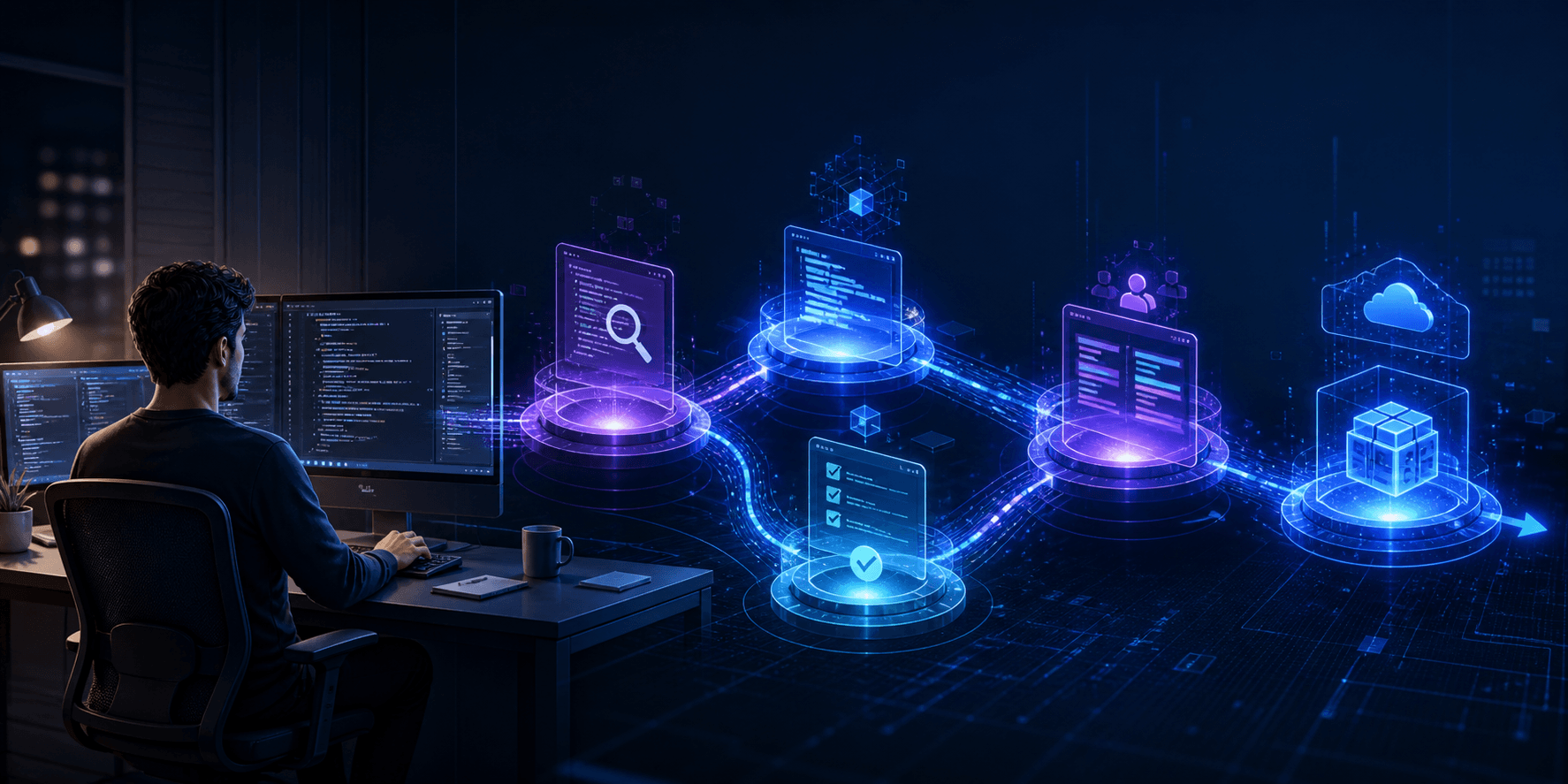
A practical implementation roadmap
Phase 1: Define the workflow
Choose one narrow task, identify its users, map required data and tools, define success metrics, and list actions that require approval.
Phase 2: Build a controlled prototype
Implement the smallest useful workflow with read-only access where possible. Add structured tools, retrieval filters, logs, and a basic evaluation dataset.
Phase 3: Run a limited pilot
Release the agent to a small user group. Review failures manually, collect feedback, measure business value, and improve instructions and controls.
Phase 4: Production hardening
Add dedicated identity, least-privilege permissions, approval gates, adversarial tests, incident response, model fallbacks, rate limits, and complete observability.
Phase 5: Scale with governance
Create an inventory of agents and owners, reusable architecture patterns, central evaluation standards, change management, and regular reviews of quality, risk, and cost.
Common production mistakes
- Giving the agent broad tools instead of narrow business operations.
- Using a prompt as the only security control.
- Testing final answers without evaluating tool use and workflow outcomes.
- Logging everything without protecting sensitive content.
- Launching without a rollback, pause, or incident-response process.
- Measuring generated output instead of business value.
- Expanding to multiple agents before one workflow is reliable.
Frequently asked questions
How long does it take to build a production-ready AI agent?
A narrow proof of concept may take weeks, while a secure production system often requires additional time for integration, evaluation, governance, and operational testing. The scope and sensitivity of the workflow matter more than the chatbot interface.
Does every AI agent need RAG?
No. RAG is useful when an agent needs current or private knowledge. Agents focused on structured transactions may rely more on APIs and tools, while some workflows use both.
Should a production agent use multiple models?
Not always. Begin with the simplest architecture that meets the requirement. Add model routing or fallback when it provides measurable improvements in reliability, latency, or cost.
Can an AI agent operate without human approval?
Low-risk, reversible actions can become autonomous after strong testing. High-impact actions should retain approval or strict deterministic limits based on the organization's risk tolerance.
What is the most important production metric?
Task success tied to a business outcome is usually the best primary metric. It should be supported by quality, security, latency, cost, and user-feedback measures.
Conclusion
A production AI agent is a complete software system, not a model wrapped in a chat interface. Reliable agents combine clear scope, layered architecture, secure tools, relevant context, measurable evaluations, and end-to-end observability.
Nextchain helps businesses design and build custom AI agents, RAG applications, MCP integrations, and the software platforms required to operate them securely. Contact Nextchain to discuss a production-ready AI agent for your workflow.
Sources
- Google Cloud: Building and scaling production-ready AI agents
- Microsoft Learn: Building a production-grade agent
- Microsoft Learn: Observability for generative and agentic AI systems
- OpenTelemetry: Generative AI observability
- NIST AI Risk Management Framework
- Model Context Protocol: Architecture overview